Sosnick Group
  Macromolecular Folding

http://sosnick.uchicago.edu


Department of Biochemistry and Molecular Biology
Institute for Biophysical Dynamics


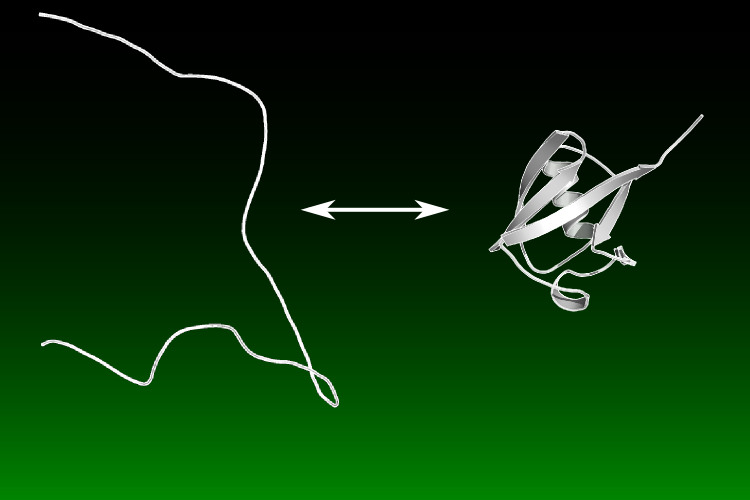
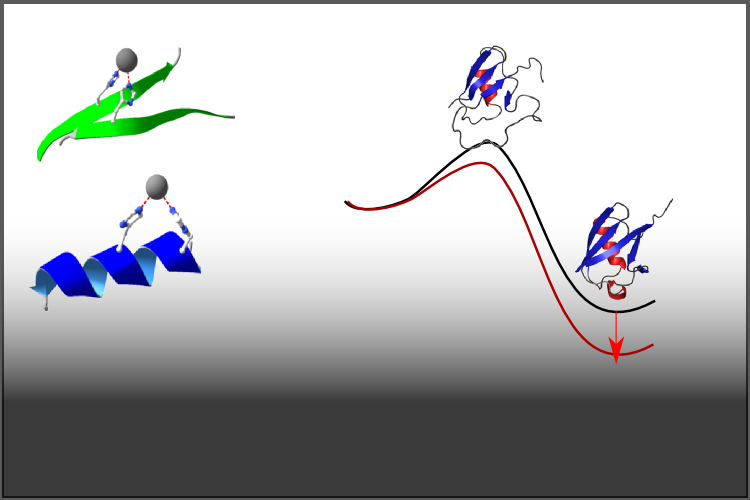
The over-all goal of my research program is to understand how complex biological molecules adopt their functional, 3-dimensional conformations: The Protein and RNA Folding Problem. These synergistic studies, both experimental and computational, are based on the premise that rigorous and innovative studies of basic processes have broad implications in many areas of biological research. The folding process has considerable biological significance while posing a tremendous intellectual challenge. Beyond aiding in the prediction of structure from sequence, the relevance of folding studies is underscored by the involvement of misfolded conformers in a variety of human diseases and the role of "natively-unfolded" proteins in regulation, recognition, and binding. From the RNA standpoint, recent discoveries of the diverse roles structural RNAs play in gene expression, such as riboswitches, illustrate the importance of understanding their dynamics and folding as well. Other classes of non-coding RNAs are likely to be found with new regulatory roles. In the past 7 years, we have learned to direct folding and dynamics of these biopolymers. We have developed ψ-analysis, a widely applicable method that identifies structures along folding routes. The method utilizes designed metal binding sites in conjunction with a new theory to analyze the accompanying non-linear Brønsted behavior. It has provided one of the most accurate descriptions of a protein folding pathway yet obtained. In RNA folding, we generated atomic level models of folding intermediates and revealed the principles of tertiary RNA stability using homologous RNAs from mesophilic and thermophilic organisms. Our studies have led to the concept of thermodynamic and kinetic hotspots. These fundamental studies have helped us examine how non-coding RNAs may fold in the cell. We found that species-specific pausing during RNA transcription improves the folding behavior, thereby suggesting that RNA sequences have co-evolved with the pausing properties of their cognate RNA polymerases.

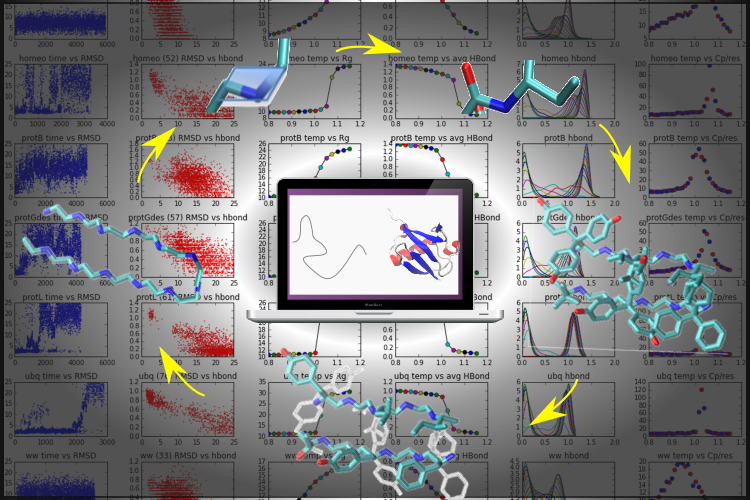
In addition to continuing the experimental protein and RNA folding studies, new research areas in the Sosnick lab involve the rational design of proteins and RNAs to control their structure and function, and the expansion of the computational component. We have developed a method to .fuse. two proteins together in order to create a single light-triggered allosteric repressor protein. We are also predicting protein structures by simulating folding pathways, taking advantage of our experimental results and an approach that dynamically integrates local and global information. In addition, we are refining crystal structures and homology models using our new move-set and statistical potentials. With Wah Chiu (Baylor), we recently have pushed the molecular weight limit for cryoEM studies down by 5-fold. This work opens up a whole new avenue of structural studies on non-coding RNAs. Our long-term goal is to create residue-level structural models using the cryoEM images, sequence information, and all-atom simulations, building on our modeling studies of RNA folding intermediates.

Graduate students in my lab enter through the new Biophysical Sciences Graduate Program, in addition to the Programs in Biochemistry & Molecular Biology, Chemistry, and Physics.


GCN4 with biHis Metal Sites
Search Nucleation Model
 
Tobin in the Ground State
Ubiquitin Folding Pathways
D/H Amide Kinetic Isotope Effects
Tobin in the Excited State

Protein Library homepage: Open source library for protein structure and sequence calculations.

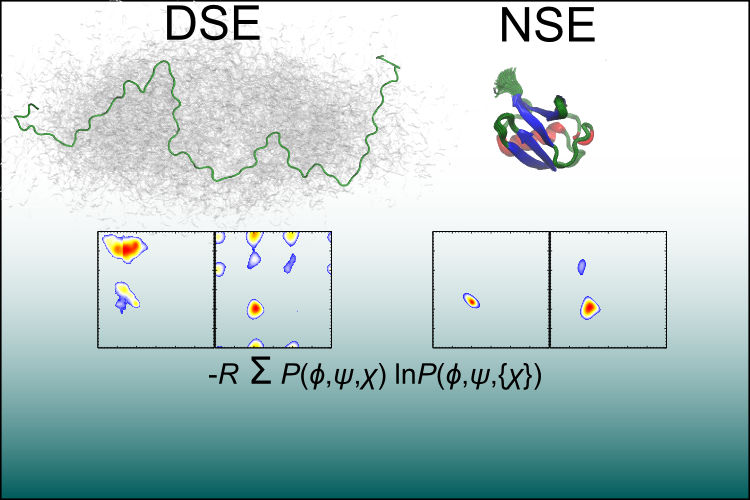
Modeling the Unfolded State: A Statistical Coil model for the Unfolded State.

Group personnel
Location
Research
Publications
Pictures
Ph.D. Theses
Local macromolecular folding literature archive 
Tobin's kids go to the Lab School

Recent Papers: 

NYTImes article on prions implicated in memory functions [HTML]
Krantz & Sosnick Metal Binding Paper [Fulltext-PDF]

"Acidic Conditions Stabilise Intermediates Populated During the Folding of Im7 and Im9" Stanislaw A. Gorski, Andrew P. Capaldi, Colin Kleanthous, Sheena E. Radford.
        JMBpp. 849-863 (2001). [Fulltext-PDF]
"Contribution of Translational and Rotational Motions to Molecular Association in Aqueous Solution"
       Hodges, Privalov, Yu [Fulltext-PDF]
"Structure is lost incrementally during the unfolding of barstar"   G.S. Lakshmikanth et al. [Full text-PDF]
"Transition states and the meaning of f-values in protein folding kinetics" Dill KA et al. [Full text-PDF]
"Microscopic Origins of Entropy, heat capacity, and the glass transition in proteins"
    - Wand AJ and Lee AL [Full text - PDF]
"Are there pathways for protein folding" [Full text-PDF] Cyrus Levinthal (1968)
"How to fold graciously" [Full text-PDF] Cyrus Levinthal (1969)

Oldies but goodies protein folding and stability paper archive

Library & Research Links
NCBI/PubMed
University of Chicago electronic science/biology journal database
University of Chicago electronic chemistry journal database
Web of Science
knovel.com - Online Scientific References
Protein Data Bank (PDB)

Proteins Science Links
GdmCl and urea concentration calculator from index of refraction
Agadir
Backbone Dependent and Independent Rotamer Libraries
Dihedral Angles from PDB Files
Surface Area Calculation (ASA) Web based
Contact Order Calulator (David Baker at U. Washington)
Translate DNA-->Protein
Primary Sequence Tools
pI and Molecular Weight Calculator
Protein Parameters Calulcator (MW, comp, Ext. coef, etc.)
Protein Precipitation
Protein Structure Tutorial
Amino Acid Structures
MSDS Information

Sosnick Lab Info
Calendar

Protocols
Lab Equipment
Curve Fitting Functions and Derivations
Propagation of Errors Analysis with Differential Calculus Tutorial
Electronics
SFM-4 Manual
Machining
Software, scripts, and programs
POPS
DNA Sequencing Facility (Basement of BSLC)
Installing JetDirect Printers on Windows XP
Manual for NEC LCD Projector (PDF)

Misc.
Postdoc Fellowship opportunities
Other Links

Send comments to Adarsh