Our Research

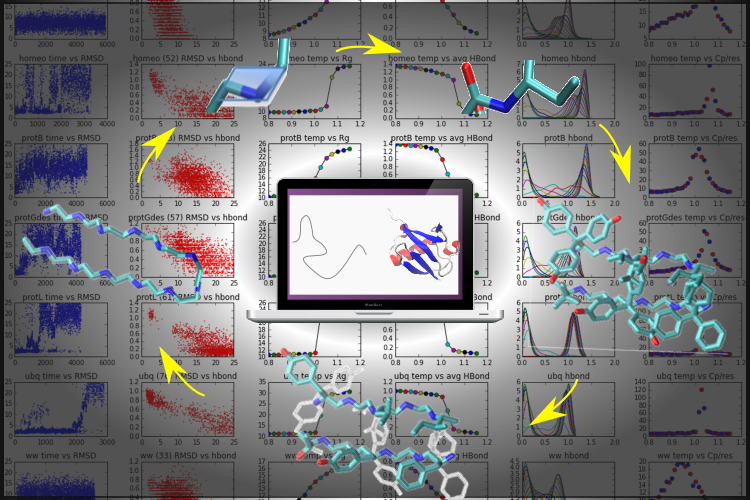
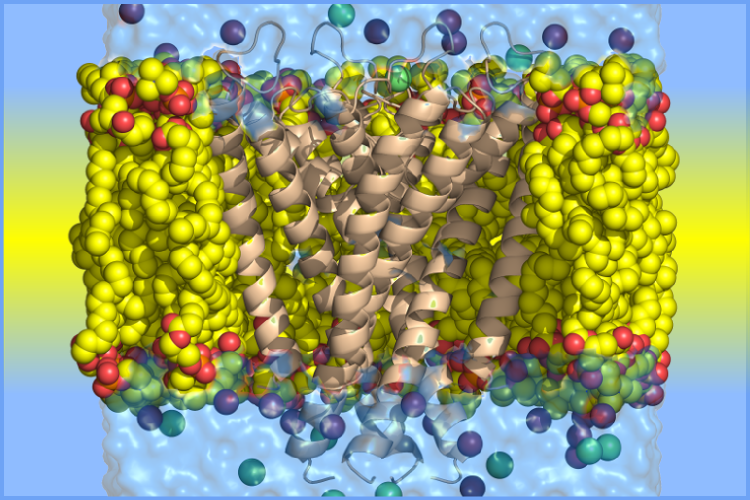
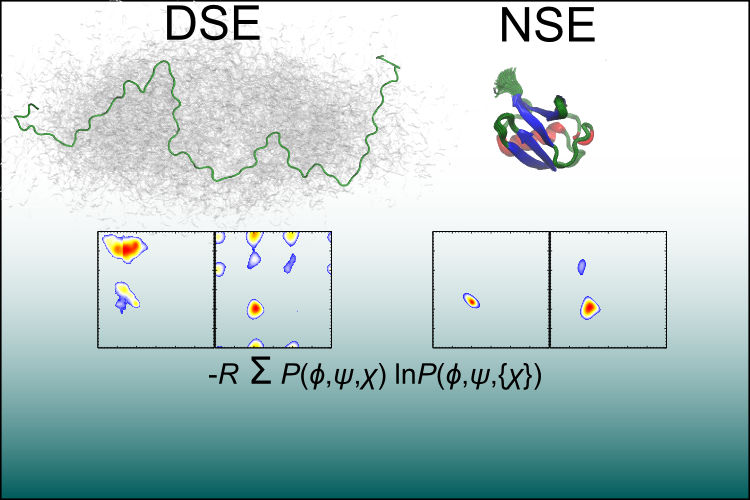
My research program involves synergistic studies of protein and RNA folding, function and design, with both experimental and computational components. The research is based on the premise that rigorous and innovative studies of basic processes have broad implications in many areas of biological research. These areas include delineating protein and RNA folding pathways and denatured states, de novo structure prediction, design of light-triggered allosteric proteins, and RNA folding during transcription. I am known for having developed Ψ-analysis, a method for delineating folding pathways using engineered bi-histidine metal ion binding sites. My lab employs a range of experimental and computational methods including NMR, small-angle X-ray scattering, rapid mixing methods, Molecular Dynamics, Langevin dynamics and coarse-grain folding simulations.

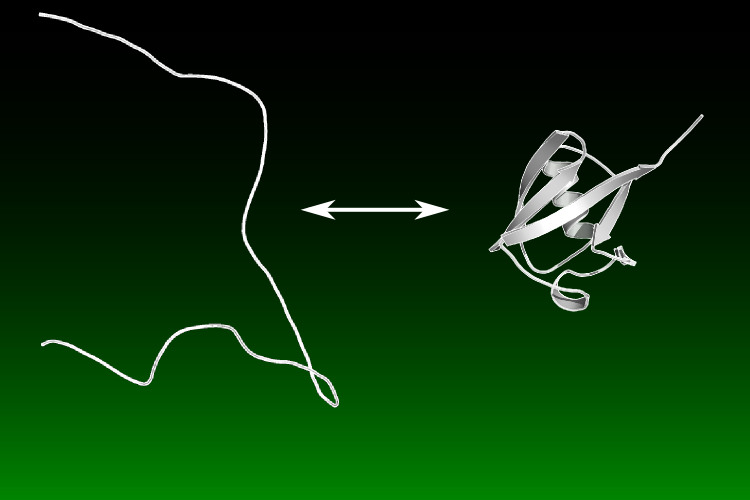
The Protein Folding Challenge: Predicting Structure from Sequence (Prof. K. Freed). Our goal is to distill the challenge down to the basic principles, code them into a computer algorithm, predict folding pathways and as an outcome, the native structure (without using without using homology, fragments, knowledge of native state, etc.) See Mimicking the folding pathway to improve homology-free protein structure prediction. (2009) DeBartolo, J., Colubri, A. Jha, A., Fitzgerald, J.E., Freed, K.F. & Sosnick, T.R. PNAS 106, 3734-9.

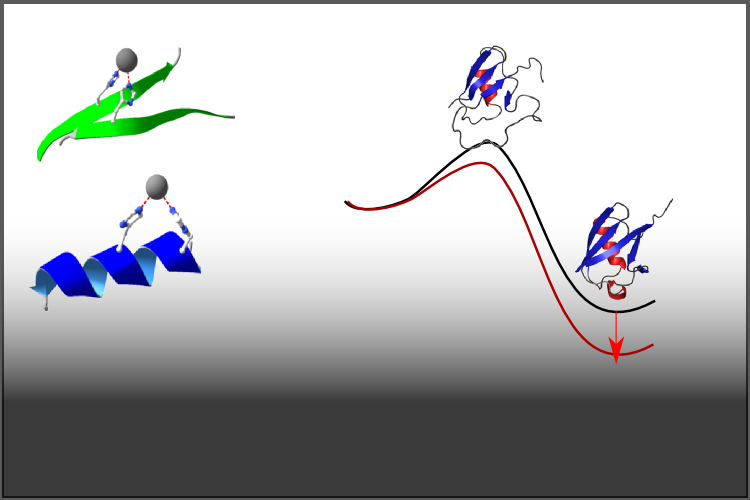
Photoswitchable proteins for controlling biological function. Photoswitchable proteins offer a unique ability to conduct perturbation experiments with high spatial and temporal precision in living cells, tissues, and intact organisms. We are designing flexible, genetically encoded system that uses light to control biological function in a variety of contexts. See Light-activated DNA binding in a designed allosteric protein. (2008) Strickland, D., Moffat, K., Sosnick, T.R. (2008) Proc. Natl. Acad. Sci. U S A 105, 10709-10714.

How proteins fold. We proposed the 70% rule. as a general property of the transition state ensemble (TSE) for proteins that obey the well-known lnkf-Reduced Contact Order correlation. Importantly, our Rule extends beyond the qualitative view that the TS adopts a native-like topology by providing a general, quantitative and predictive framework for describing the rate-limiting step in protein folding. We are applying and testing this generality of this rule. See Quantifying the Structural Requirements of the Folding Transition State of Protein A and Other Systems. Baxa, M. C. et al. (2008), JMB 381, 1362. And Kinetic barriers and the role of topology in Protein and RNA folding. (2008) Sosnick, T.R. Prot. Sci. 17, 1308-1381.

RNA Folding (Prof. Tao Pan). We are interested in tertiary RNA folding, both the fundamental biophysical chemistry including comparative studies of meso- and thermophilic RNAs, and folding during transcription. Wong, T, et al. (2007) Folding of non-coding RNAs during transcription facilitated by pausing-induced non-native structures. PNAS 104, 17995-18000. Baird, NJ. et al. (2007) Folding of a universal ribozyme: the ribonuclease P RNA, Quarterly Review of Biophysics.

Graduate students in my lab enter through the new Biophysical Sciences Graduate Program, in addition to the Programs in Biochemistry & Molecular Biology, Chemistry, and Physics.